Mostrando postagens com marcador Direito Estrangeiro. Mostrar todas as postagens

quarta-feira, 5 de setembro de 2018

Seminário Internacional: Prof. Mark Hill QC (19 Set 2018)


Seminário Internacional com o Prof. Mark Hill

"Religious Liberty in the United Kingdom"

O evento ocorrerá no dia 19 de setembro de 2018, a partir das 16h30, na Faculdade de Direito - Sala dos Professores.

Interessados em participar poderão se inscrever gratuitamente AQUI.

Evento gratuito. Vagas limitadas!

O seminário será exclusivamente em língua inglesa.

Sobre o palestrante:

Mark Hill QC is a British Professor and Barrister. He has represented clients in UK Supreme Court and European Court of Human Rights. He is a recorder on the Midland Circuit (sitting in criminal, civil and family cases) and Deputy Judge of Upper Tribunal, Immigration and Asylum Chamber. He sits as judge in ecclesiastical courts of the Church of England and is Visiting Professor at Cardiff University’s Centre for Law and Religion (United Kingdom), at University of Pretoria in South Africa, and at the Dickson Poon School of Law at King’s College, London, and formerly a Visiting Fellow at the Univesity of Cambridge. Publications include Magna Carta, Religion and the Rule of Law, Religion and Law in the United Kingdom, Religion and Discrimination Law in the European Union, Ecclesiastical Law, Religious Liberty and Human Rights, and English Canon Law. He is a Consultant Editor of the Ecclesiastical Law Journal and a member of the Editorial Boards of the Oxford Journal of Law and Religion and the Revista General de Derecho Canónico y Derecho Eclesiástico del Estado. He is Ecumenical Fellow in Canon Law at the Venerable English College in Rome, and a former President of the European Consortium for Church and State Research. He is an accredited mediator, current co-chair, and a founder of BIMA, a charity which promotes faith-based mediation.

Realização:
Centro Brasileiro de Estudos em Direito e Religião - CEDIRE (FADIR/UFU)

Apoio:
Programa de Mestrado em Direito (FADIR/UFU)

Observação:
Programação sujeita a alterações.

Contato:
contato@direitoereligiao.org

Encontre-nos no Facebook:
https://www.facebook.com/direitoereligiaoufu/posts/1972467362820310

quinta-feira, 30 de junho de 2016

FORO SUDAMERICANO PARA LA LIBERTAD RELIGIOSA 2016

FORO SUDAMERICANO PARA LA LIBERTAD RELIGIOSA 2016
"La libertad religiosa, esencia de la igualdad humana"

Buenos Aires, 9 al 11 de noviembre, 2016


COMITÉ ORGANIZADOR

COMITÉ DIRECTIVO
Raúl Scialabba – Presidente del CALIR
Helio Carnassale – Director de IRLA Sudamericana
Luís Mendiola – Secretario del CALIR
Darío Bruno – Director de IRLA Argentina

COMITÉ EJECUTIVO
Juan Navarro Floria
David Frol
Waldo Villalpando
Raúl Rocha Gutiérrez
Mario Burman

INVESTIGADORES PARTICIPANTES - INVITADOS

Dr. Ganoune Diop: Dr. en Teología y Dr. h.c. en Derechos Humanos por Andrews University. Secretario Ejecutivo de IRLA, Washington, Estados Unidos.

Dra. Elisa Carrió: Abogada. Presidenta de la Comisión de Relaciones Exteriores y Culto de la Cámara de Diputados de la Nación Argentina.

Dr. Lelio Maximino Lellis - Pos-Doctorado en Derecho por la Universidad de Columbia. Decano de la Facultad de Derecho de la UNASP, San Pablo, Brasil.

Dr. Juan Martín Vives - Doctor en Derecho Público Global (Universidad Autónoma de Barcelona, España). Director del Centro de Estudios sobre Derecho y Religión (UAP).

Dr. Rodrigo Vitorino Souza Alves - Master en Derecho. Coordinador del CEDIRE de la Universidad Federal de Uberlandia, Brasil. Doctorando en Derecho y Religión.

Dr. Juan Navarro Floria - Profesor en Ciencias Jurídicas, Iglesia y Estado, Derecho Civil y Eclesiástico (UCA) Buenos Aires. Investigador del ICLRS, CALIR., Escritor.

Dr. Octavio Lo Prete - Docente de Derecho en la UBA y UCA, Buenos Aires. Miembro del ICLRS. Asesor de la Secretaria de Culto de la Nación Argentina. Escritor.

Dr. Raúl Rocha Gutiérrez - Prof. del Seminario Internacional Teológico Bautista, SITB. Dr. en Teología y Ciencias Sociales (UBA). Escritor teológico y Libertad Religiosa.

Dra. Damaris Dias Moura Kuo - Posgraduada en Derechos Fundamentales Univ. de Coimbra, Portugal. Pres. Comisión Derecho y Libertad Religiosa del Colegio Público de Abogados de San Pablo, Brasil.

Mg. Helio Carnassale - Master en Ciencias de la Religión por la Univ. Metodista de San Pablo. Ex Dir. General de la Universidad Adventista de San Pablo UNASP, Brasil. Dir. IRLA Sudamérica.

Listado parcial con actualizaciones semanales (consultar o site oficial)


Maiores informações: http://www.calir.org.ar/foro2016/index.htm


terça-feira, 19 de abril de 2016

Ciclo de Palestras com a Dra. Sarah Hayes - Diálogos Anglo-Brasileiros sobre Direito e Religião


Diálogos Anglo-Brasileiros sobre Direito e Religião


Convidada: Dra. Sarah Hayes (Oxford Brookes University)

- LLM (Canon Law) 2015 Cardiff University (Distinction)
- BA (Hons) Politics and Modern History 1984 Manchester University
- Solicitor, Admitted 1990


Sarah Hayes has a PhD research scholarship at Oxford Brookes University. She is studying state and religions' internal laws concerning religious buildings, with a particular emphasis on the impact which the use of religious buildings for wider community use has on religions' autonomy over their buildings. The study comprises three parts: a legal analysis of state, Sikh, Islamic and some Christian denominations' laws about religious property; an examination of government inclusion policies; and case studies evidencing the practical outworking of law and policy on Gurdwaras, Churches and Mosques.


Palestras: Law and religion in the United Kingdom; Secular and religious law.


Edição de Uberlândia-MG

- Data: 16 e 17 de maio de 2016 (segunda e terça)

- Horário: 16h00-18h00

- Local: Auditório 5R A e B da Universidade Federal de Uberlândia

- Endereço: Avenida João Naves de Ávila, 2121, Uberlândia-MG

Inscrição: Enviar e-mail para labdireitoshumanos@gmail.com, informando CPF, com o assunto: "Inscrição: Diálogos Anglo-Brasileiros - (nome)".


Edição do Rio de Janeiro-RJ


* Em parceria com a Escola da AGU

- Data: 23 de maio de 2016

- Horário: 10h00-12h30 e 14h-16h30

- Local: Auditório da Escola da Advocacia Geral da União da 2ª Região

- Endereço: Rua da Assembleia. nº 77, 13º andar, Centro, Rio de Janeiro-RJ


* Em parceria com o Núcleo de Estudos Constitucionais da PUC-Rio

- Data: 24 de maio de 2016

- Horário: 14h30

- Local: Auditório B8 da Pontifícia Universidade Católica do Rio de Janeiro

- Endereço: Campus da PUC-Rio - R. Marquês de São Vicente, 225 - Gávea, Rio de Janeiro - RJ


Realização: Centro Brasileiro de Estudos em Direito e Religião; Laboratório de Direitos Humanos e Justiça Global; Escola da Advocacia Geral da União da 2ª Religião; Núcleo de Estudos Constitucionais da PUC-Rio.


Vagas limitadas!

quarta-feira, 25 de novembro de 2015

Anglo-Brazilian Dialogues on Law and Religion / Diálogos Anglo-Brasileiros sobre Direito e Religião

Anglo-Brazilian Dialogues on Law and Religion
Diálogos Anglo-Brasileiros sobre Direito e Religião

Hosted by Oxford Brookes University and the Universidade Federal de Uberlândia (Federal University of Uberlandia)

You are invited to
Participate in internationally hosted on-line seminars about law and religion
Programme
In presenting papers from two very different contexts, law and religion scholars from Brazil and the UK will provide a starting point from which to explore commonalities and differences between varying legal contexts. It is anticipated that this will stimulate discussion among participants to enrich an understanding of the legal systems in which participants are based, the status of religion within those legal systems and the relationships of religions and the adherents of religion to those legal systems.
Details of seminars
Wednesday 25 November, 2-4p.m
Sacred ground, sacred spaces, and sacred places
Rodrigo Vitorino, Director of the Law and Religion Research Group at the University of Uberlandia and Sarah Hayes from Oxford Brookes University.

Friday 11 December, 2-4 p.m.
Religious symbols and criminal law

Peter Edge, Professor with the Fundamental Rights and Equalities Group at the School of Law, Oxford Brookes University and Fábio Leite is Professor of Constitutional Law at the Pontifical Catholic University of Rio de Janeiro.
Instructions for joining the on-line conference

To participate in the conference simply complete the registration form at http://goo.gl/forms/Gv4HwgD6R7 On receipt of your details we will send you instructions on how to join the on-line conference.


quarta-feira, 17 de junho de 2015

Resolution 2036 (2015): Tackling intolerance and discrimination in Europe with a special focus on Christians

Resolution 2036 (2015)
Final version

Author(s): Parliamentary Assembly - Council of Europe

Origin: Assembly debate on 29 January 2015 (8th Sitting) (see Doc. 13660, report of the Committee on Equality and NonDiscrimination, rapporteur: Mr Valeriu Ghiletchi). Text adopted by the Assembly on 29 January 2015 (8th Sitting).


Tackling intolerance and discrimination in Europe with a special focus on Christians

1.  Intolerance and discrimination on grounds of religion or belief affect minority religious groups in Europe, but also people belonging to majority religious groups. Numerous acts of hostility, violence and vandalism have been recorded in recent years against Christians and their places of worship, but these acts are often overlooked by the national authorities. Expression of faith is sometimes unduly limited by national legislation and policies which do not allow the accommodation of religious beliefs and practices.

2.  The reasonable accommodation of religious beliefs and practices constitutes a pragmatic means of ensuring the effective and full enjoyment of freedom of religion. When it is applied in a spirit of tolerance, reasonable accommodation allows all religious groups to live in harmony in the respect and acceptance of their diversity.

3.  The Parliamentary Assembly has recalled on several occasions the need to promote the peaceful coexistence of religious communities in the member States, notably in Resolution 1846 (2011) on combating all forms of discrimination based on religion, Recommendation 1962 (2011) on the religious dimension of intercultural dialogue and Resolution 1928 (2013) on safeguarding human rights in relation to religion and belief, and protecting religious communities from violence.

4.  Freedom of thought, conscience and religion is protected by Article 9 of the European Convention on Human Rights (ETS No. 5) and considered as one of the foundations of a democratic and pluralist society. Limitations to the exercise of freedom of religion must be restricted to those prescribed by law and necessary in a democratic society.

5.  The Assembly is convinced that measures should be taken to ensure the effective enjoyment of the protection of freedom of religion or belief afforded to every individual in Europe.

6.  The Assembly therefore calls on the Council of Europe member States to:

6.1. promote a culture of tolerance and “living together” based on the acceptance of religious pluralism and on the contribution of religions to a democratic and pluralist society, but also on the right of individuals not to adhere to any religion;

6.2. promote reasonable accommodation within the principle of indirect discrimination so as to:

6.2.1. ensure that the right of all individuals under their jurisdiction to freedom of religion and belief is respected, without impairing for anyone the other rights also guaranteed by the European Convention on Human Rights;

6.2.2. uphold freedom of conscience in the workplace while ensuring that access to services provided by law is maintained and the right of others to be free from discrimination is protected;

6.2.3. respect the right of parents to provide their children with an education in conformity with their religious or philosophical convictions, while guaranteeing the fundamental right of children to education in a critical and pluralistic manner in accordance with the European Convention on Human Rights, its protocols and the case law of the European Court of Human Rights;

6.2.4. enable Christians to fully participate in public life;

6.3. protect the peaceful exercise of freedom of assembly, in particular through measures to ensure that counter-demonstrations do not affect the right to demonstrate, in line with the guidelines on freedom of assembly, of the European Commission for Democracy through Law (Venice Commission) and the Office for Democratic Institutions and Human Rights of the Organization for Security and Co-operation in Europe (OSCE/ODIHR);

6.4. uphold the fundamental right to freedom of expression by ensuring national legislation does not unduly limit religiously motivated speech;

6.5. publicly condemn the use of and incitement to violence, as well as all forms of discrimination and intolerance on religious grounds;

6.6. combat and prevent cases of violence, discrimination and intolerance, in particular by carrying out effective investigations in order to avoid any sense of impunity among the perpetrators;

6.7. encourage the media to avoid negative stereotyping and communicating prejudices against Christians, in the same way as for any other group;

6.8. ensure the protection of Christian minority communities and allow such communities to be registered as a religious organisation, and to establish and maintain meeting places and places of worship, regardless of the number of believers and without any undue administrative burden;

6.9. guarantee the enjoyment by Christian minority communities of the right to publish and use religious literature.


quinta-feira, 5 de fevereiro de 2015

Regulação, Direitos Humanos e Religião (Livro)

REGULAÇÃO, DIREITOS HUMANOS E RELIGIÃO: O PROBLEMA DO ENQUADRAMENTO DOS IMPRESSOS RELIGIOSOS NO REGIME DE REGULAÇÃO DA PUBLICIDADE NO REINO UNIDO
De: Rodrigo Vitorino Souza Alves

RESUMO: A distribuição de impressos religiosos no Reino Unido tem sido incluída no regime da regulação da publicidade, com vistas à aplicação das normas e standards deste regime àquela atividade. O presente trabalho questiona esse enquadramento, ao investigar o problema da regulação da comunicação social em matéria de exercício da liberdade religiosa vis-à-vis os limites intrínsecos da regulação da publicidade e a limitação externa pelas normas definidoras dos direitos humanos. Depois de descrever o sistema regulatório da publicidade do Reino Unido e de discutir os casos relevantes no âmbito da Advertising Standards Authority – ASA à luz da liberdade religiosa, concluiu-se pela inadequação da atividade regulatória nos casos estudados e pela impropriedade da regulação stricto sensu para as atividades religiosas em geral, reconhecendo-se ainda a qualificada proteção atribuída pelos tratados internacionais à liberdade religiosa, que exige o atendimento aos critérios deles constantes para a imposição de quaisquer restrições. 

PALAVRAS-CHAVE: regulação; publicidade; liberdade religiosa; proselitismo.

EDITORA: Instituto Jurídico da Faculdade de Direito da Universidade de Coimbra.

SITE: http://www.fd.uc.pt/ij/publicacoes/estudos_serieD/pub_6/D_numero6.pdf

quinta-feira, 3 de julho de 2014

Caso S.A.S. v. França (Processo n. 43835/11) Julgamento pelo Tribunal Pleno - CEDH


Em primeiro de julho de 2014, o Tribunal Europeu dos Direitos Humanos, reunido em sessão plenária, proferiu a sentença no caso do SAS v França.

O caso teve origem em uma demanda contra a República Francesa apresentada ao Tribunal nos termos do artigo 34 da Convenção para a Protecção dos Direitos Humanos e das Liberdades Fundamentais, por uma nacional francesa, em 11 de abril de 2011.

A Requerente se queixou de que a proibição do uso de roupas que cobrem o rosto em lugares públicos, introduzida pela Lei n. 2010-1192, de 11 de outubro de 2010, privou-a da possibilidade de usar o véu islâmico em público. Ela alegou que houve uma violação dos artigos 3, 8, 9, 10 e 11 da Convenção, tomados separadamente e em conjunto com o artigo 14 da Convenção.

O Tribunal decidiu, por quinze votos a dois, que não houve violação dos artigos 8 e 9 da Convenção Europeia de Direitos Humanos, e manteve, por unanimidade, que não houve violação do artigo 14 e que nenhuma questão separada decorre o artigo 10 da Convenção, considerados isoladamente ou em conjunto com o artigo 14 da Convenção.

Para ler o Julgamento e o Voto Dissidente, clique aqui.


CASE OF S.A.S. v. FRANCE (Application no. 43835/11) Grand Chamber Judgement


In 1 July 2014, the European Court of Human Rights, sitting as a Grand Chamber, delivered the judgment in the case of S.A.S. v. France.

The case originated in an application against the French Republic lodged with the Court under Article 34 of the Convention for the Protection of Human Rights and Fundamental Freedoms by a French national, on 11 April 2011.

The applicant complained that the ban on wearing clothing designed to conceal one’s face in public places, introduced by Law no. 2010-1192 of 11 October 2010, deprived her of the possibility of wearing the full-face veil in public. She alleged that there had been a violation of Articles 3, 8, 9, 10 and 11 of the Convention, taken separately and together with Article 14 of the Convention.

The Court held, by fifteen votes to two, that there has been no violation of Articles 8 and 9 of the European Convention of Human Rights, and held, unanimously, that there has been no violation of Article 14 and that no separate issue arises under Article 10 of the Convention, taken separately or together with Article 14 of the Convention.

To read the Judgement and the Dissenting Opinion, click here.


terça-feira, 18 de março de 2014

Tunísia aprova Constituição com liberdade religiosa e direito das mulheres

O GLOBO
COM AGÊNCIAS INTERNACIONAIS

Publicado: 27/01/14 - 16h40

Atualizado: 27/01/14 - 17h38


TUNIS - Os tunisianos aprovaram nesta segunda-feira uma nova Constituição, a primeira após décadas de ditadura e de dois anos de intensas discussões...

segunda-feira, 10 de fevereiro de 2014

Religion and Law in Spain

Religion and Law in Spain
by: Javier Martínez-Torrón

Description: Derived from the renowned multi-volume International Encyclopaedia of Laws, this convenient resource provides systematic information on how Spain deals with the role religion plays or can play in society, the legal status of religious communities and institutions, and the legal interaction among religion, culture, education, and media. After a general introduction describing the social and historical background, the book goes on to explain the legal framework in which religion is approached. Coverage proceeds from the principle of religious freedom through the rights and contractual obligations of religious communities; international, transnational, and regional law effects; and the legal parameters affecting the influence of religion in politics and public life. Also covered are legal positions on religion in such specific fields as church financing, labour and employment, and matrimonial and family law. A clear and comprehensive overview of relevant legislation and legal doctrine make the book an invaluable reference source and very useful guide. Succinct and practical, this book will prove to be of great value to practitioners in the myriad instances where a law-related religious interest arises in Spain. Academics and researchers will appreciate its value as a thorough but concise treatment of the legal aspects of diversity and multiculturalism in which religion plays such an important part.

Table of contents:
The Author.
List of Abbreviations.
Preface.
General Introduction.
Part I. Legal Framework and Sources.
Chapter 1. Constitutional Position of Religion.
Chapter 2. Other Legislation with Regard to Religion.
Chapter 3. Typology of the System.
Part II. Religious Freedom in General.
Chapter 1. Individual Religious Freedom.
Chapter 2. Freedom of Conscience and Legal Obligations: Conscientious Objections.
Chapter 3. Collective Religious Freedom.
Chapter 4. Organizational Religious Freedom.
Part III. Legal Status of Religious Communities.
Chapter 1. Formal Status of Religious Communities.
Chapter 2. Autonomy of Religious Communities.
Chapter 3. Places of Worship and Meeting.
Chapter 4. Fundamental Rights and Religious Communities.
Chapter 5. Contractual Religious Freedom.
Chapter 6. Religious Assistance in Public Institutions.
Part IV. International, Transnational, Regional Effects on Religious Communities.
Chapter 1. International Law Effects on Religious Communities.
Chapter 2. Transnational Law Effects on Religious Communities.
Chapter 3. Regional Law Effects on Religious Communities.
Part V. Religion and Politics.
Chapter 1. Religion Influence in Politics.
Chapter 2. Political Influence in Religion.
Chapter 3. Interaction between Religion and State on a Political and Legal Level.
Part VI. Labour Law within Religious Communities.
Chapter 1. Scope of Application of Labour Law.
Chapter 2. Religious Ministers and Labour Law.
Chapter 3. Other Church Employees and Labour Law.
Part VII. Religious Communities and Protections of the Individual.
Chapter 1. Protection of Privacy.
Chapter 2. Freedom to Marry.
Chapter 3. Freedom of Expression.
Chapter 4. Due Process Norms and Religious Groups.
Chapter 5. Professional Secrecy.

The author: Professor of Law (Catedrático), Complutense University, Madrid (Spain) since 2000, and Director of the Department of Law and Religion of Complutense University (since 2009). Doctor utroque iure (of Law and of Canon Law). He obtained his first chair at the University of Granada, in 1993, where he was Director of the Area of Law and Religion (1993-2000). Founder and Director of the Seminar of Comparative Law of the University of Granada (1997-2000). Visiting professor and researcher in numerous Universities of Spain, Europe, North-America, and Latin-America (among them Cambridge, Chicago, Columbia, Berkeley, Harvard, Ottawa, Freiburg (Germany) and Universidad Nacional Autónoma de México - UNAM). He is also, since 2001, part-time Professor at Saint Louis University Law School (Comparative Law, Summer Law Courses).

Year: 2014.

Publisher: Kluwer Law International

http://www.kluwerlaw.com/Catalogue/titleinfo.htm?wbc_purpose=basic525252525252f%3fmode?ProdID=9041151834&name=Religion-and-Law-in-Spain


quinta-feira, 5 de dezembro de 2013

S.A.S. v. France: A short summary of an interesting hearing

NOVEMBER 29, 2013

by Saïla Ouald Chaib

On Wednesday, our research team attended the Grand Chamber hearing at the European Court of Human Rights in the case of S.A.S. v. France, in which we submitted a third party intervention on behalf of the Ghent University Human Rights Centre. The case concerns the French law banning the face veil, a highly debated piece of legislation, which was also obvious from the amount of international press covering the hearing. I will first briefly discuss the content of our third-party intervention and then turn to a summary of the hearing which left a positive impression on us.

Third party intervention of the Ghent HRC in the case of S.A.S.

At the time when the French and Belgian legislation banning the face veil was enacted, no empirical evidence on women wearing a face veil was available. These laws were thus mainly based on mere assumptions. We were of the opinion that the findings of the empirical research conducted by Prof. Eva Brems, dr. Jogchum Vrielink and myself, and the research of our colleagues in France, Denmark, the UK and the Netherlands, who came to similar conclusions, would enable the Court to assess the human rights impact of the face veil bans in a more adequate way. The integral text of our intervention can be found here. We concluded from our empirical research that bans on face coverings are partly based on erroneous assumptions: they do not actually serve their stated purpose, they are disproportionate and they deny procedural justice. We argued that bans of this kind do not only restrict freedom of religion and the private life of the women concerned but are also clearly discriminatory. We also asked the Court to take into account that these kind of bans target a vulnerable group consisting of a minority within a minority and that this legislation is based on harmful stereotypes and stigmas. We also asserted that this kind of legislation should be seen in the context of hostility and discrimination of Muslims in Europe as is documented in various reports of NGO’s and European institutions.

Background of the case

On the day the French ban on full face veiling came into force, S.A.S., a 23 year old French citizen, filed an application against France to challenge the ban. She argued that as a woman wearing a face veil, the ban constitutes a violation of her right to private life, freedom of religion, freedom of expression and her right not to be discriminated against. The Chamber relinquished jurisdiction of the case to the Grand Chamber. In addition to our Human Rights Centre, Amnesty international, Liberty, Soros foundation and Article 19 submitted written observations in the case as third party interveners. Also the Belgian State, the only country apart from France having a ban on face veils, intervened in the Grand Chamber procedure and was allowed to make oral observations during the hearing.

The lawyers informed the Court that although the applicant wished to be present during the hearing, she did not come because of the publicity around the topic and because of the ban in force. Indeed, since Strasbourg is a French city, being present at the hearing would have required the applicant to remove her veil on the way to the Court, otherwise she would be infringing the law and risking a fine.

Arguments of the parties

The agent of France first contested the admissibility of the case, claiming that the applicant did not exhaust domestic remedies and that she cannot claim to be a victim under the Convention since she filed her complaint on the day the law came into force without having experienced direct consequences of the ban at that time. The applicant’s lawyer replied that, since the contested law is unquestionably applicable to her, it cannot be expected that the applicant should first have gone through prosecution by the French authorities before being able to file a complaint before the Strasbourg Court.

Regarding the merits, the agent of the French government started by stressing the general formulation of the legislation, stating that no specific garment is mentioned in the law, neither a specific religion. Nonetheless the government accepted that the law could lead to an interference with the freedom of religion when a face covering attire is worn out of religious reasons. The government subsequently argued, for the reasons mentioned bellow, that they had not exceeded their margin of appreciation and that the law and the sanctions are proportionate to the aims pursued.

First of all, France argues that individuals should be “identifiable when required” in order to avoid identity fraud and to protect the security of individuals and property. A second aim invoked by the government, and clearly the most important one, is the aim concerning “the minimal requirements for living in a society”. The French agent explained that the ban aims at preserving relations between human beings, the so-called “vivre ensemble” and that individuals are required in the public space to interrelate with one another. The French Government further stated that it values the expression of religious diversity in the public sphere, but that this must be compatible with principle of ‘secularist pluralism’. Finally, France argued that the ban aims at preserving equality between men and women and at defending the dignity of human beings.

As to the right to private life, France argued that the ban concerns the public space and not the private sphere and that it does not see how the ban could affect aspects of private life such as the right to privacy and physical integrity. Concerning the discrimination claim, France argued that the ban is not discriminatory on the basis of gender, on the contrary, it aims to fight gender discrimination. Neither did it consider that the law discriminates Muslims, since the face veil is not a widely accepted practice within the Muslim community.

The lawyers of S.A.S. on the other side argued that the ban on face veils is disproportionate and advocated for a narrow margin of appreciation in the matter. They maintained that in order to ensure proportionality, the Court should consider the legitimacy of the state’s assumptions instead of granting them a wide margin of appreciation. Accepting a wide margin would, according to the applicant’s lawyers, entail a danger that “the fear of majorities would overrule the rights and freedoms of minorities”. Concretely, they argued that, since the law concerns an intimate aspect of one’s identity and since women wearing a face veil are part of a small vulnerable group that was hardly consulted on the matter, the Court should not accord a wide margin of appreciation to the State. The lawyers also contested that the law does not aim to target Muslim women wearing the full face veil. They argue that though neutral on its face, the law has a disparate impact on Muslim women. Therefore they allege a violation of article 14 of the Convention, stating that the ban discriminates Muslim women on the basis of their gender, ethnicity and religion. In conclusion the applicant’s attorney said that the ban consists of a “disproportionate measure towards a disadvantaged minority group with no evidence of a threat to social order, equality, liberty or fraternity” and that the ban only aims at offering comfort to the majority.

In the second part of their oral observations the applicant’s lawyers confronted us with the absurdity of the ban. They referred to the exceptions on the ban where covering the face is still allowed. People are allowed to cover their face during festivities, “for party reasons” such as at “le Carnaval de Paris“, while the applicant is not allowed to cover her face for religious reasons. The law also foresees an exception for covering the face in places of worship such as mosques. However, this would mean that the applicant would offend the law as soon as she opens her front door, until she reaches the door of her mosque. The lawyer also referred to the willingness of the applicant to compromise. She is willing for example to uncover her face when needed for identification. Finally, the applicant’s attorney pointed to the “perverse effect” of the law, arguing that the law led to more hostility and intolerance against women wearing a face veil.

Judges ask pertinent questions

A very interesting part of the hearing was the part where the judges asked questions to the parties. The French Judge, André Potocki, first asked to the applicant what would be, according to them, a less restrictive measure instead of the current general ban. He further asked the French government whether, in light of the aim of public safety, a general ban would not be disproportionate. A next question asked both by Judge Potocki and Judge Møse, concerned the aim of “the minimal requirements for living in a society”. They asked how the government would situate this aim, within the list of legitimate aims mentioned under paragraph 2 of article 9. Another question concerned the concept of human dignity. The French judge asked whether it is up to the state to say that a behavior that is adopted freely goes against the dignity of that person. And he also asked France to explain how a face veil would affect the dignity of people who come into contact with women wearing a face veil, as France argued. Judge Møse further asked whether the findings concerning tensions that women wearing a face veil nowadays encounter is not contradictory to the aim of social cohesion. Judge Nussberger finally asked whether in case the applicant would wear a veil of a finer material with which her facial features would be recognizable as she herself proposes as a matter of compromise, whether that behavior would be covered by the ban.

We left the hearing in a positive spirit. Not because we think that the outcome in this case will be positive -we can fairly say that the outcome is totally unpredictable— but because, following the questions asked by the judges we are hopeful that finally the issue of the full facial veil will, during the deliberations, be discussed in a thorough manner from a human rights perspective. We realize that this is not an easy issue to deal with. It led to huge discussions in the political and societal sphere, discussions that were very often one-sided and stigmatizing. When we assume that a face veil is imposed on women, it is just absurd to fine them and thus punish them with the aim of protecting them. This would be a case of domestic violence for which other legal tools already exist. But if we look at the issue from the perspective of women who choose to wear a face veil, such as Mrs. S.A.S. and the women mentioned in the French, Danish, Dutch and our Belgian research, the question that should be asked is whether the general public’s discomfort with- or fear of face veils or of the women wearing them justifies infringing these women’s fundamental human rights. Now it’s up to the Court to answer that question

Source: http://strasbourgobservers.com/


sábado, 23 de novembro de 2013

Is Europe Joining the International Religious Freedom Bandwagon?

Growing international threats to religious freedom are coming under increasing scrutiny by Western democracies. Long a foreign policy emphasis in the United States, and more recently in Canada, the crisis in international religious freedom (IRF) is gaining greater attention in Europe, especially in Italy and the United Kingdom. Can these nations be effective in promoting international religious freedom? Will their own domestic struggles with religious freedom handicap their efforts abroad?

Pasquale Annicchino, a fellow at the Robert Schuman Centre for Advanced Studies at the European University Institute and at the University of Salerno, discussed recent developments in IRF promotion by Italy and the EU. David Reeves Taylor, chairman of Christian Solidarity Worldwide and a former British diplomat, addressed recent developments in IRF promotion by the UK. The Religious Freedom Project's Thomas Farr moderated.

Featuring

Pasquale Annicchino is a research fellow at the Robert Schuman Centre for Advanced Studies, a fellow in constitutional law and comparative constitutional law at the Department of Political Science of the University of Salerno, and a member of the European University Institute’s Ethics Committee. Annicchino serves as book review editor for Religion and Human Rights: An International Journal and is a member of the editorial board of Quaderni di Diritto e Politica Ecclesiastica, published by Il Mulino. He has written on law, religion and religious freedom in Europe, and is a member of the ReligioWest project. This project studies how different Western states in Europe and North America are redefining their relationship to religions, under the challenge of increasing religious activism in the public sphere, associated with new religious movements and with Islam. Annicchino received his doctorate in law from the University of Siena, his LL.M/D.E.A. from the European Academy of Legal Theory in Brussels, and an LL.M from University College London, where he also served as editor in chief of the UCL Human Rights Review.

David Taylor is an international affairs analyst with a particular focus on the Middle East. He spent 17 years in the UK Foreign and Commonwealth Office, most of it focused on the Middle East and North Africa. He then spent 14 years as Middle East editor and deputy editor of the Daily Brief at Oxford Analytica. He now divides his time between editorial work for Oxford Analytica, the Lausanne Movement and other clients, and working with Christian Solidarity Worldwide (CSW), the Religious Liberty Partnership and other NGOs on international religious freedom issues.


Source: The Berkley Center for Religion, Peace, and World Affairs at Georgetown University.


domingo, 17 de novembro de 2013

Seminario Internacional de Profesores: NEUTRALIDAD DEL ESTADO, RELIGIONES E IDEOLOGÍAS

NEUTRALIDAD DEL ESTADO, RELIGIONES E IDEOLOGÍAS

Jueves 21 de noviembre de 2013
Sala de Juntas de la Facultad de Derecho
Universidad Complutense de Madrid

Programa

10:30 Inauguración del Seminario: Prof. Dr. Ricardo García García (Subdirector General de Relaciones con las Confesiones Religiosas, Ministerio de Justicia)

10:45 Mesa Redonda. Moderadora: Prof. Dra. Gloria Moreno Botella (Universidad Autónoma de Madrid)

Prof. Dr. Silvio Ferrari (Universitá degli Studi di Milano): E' possibile costruire uno spazio pubblico equo ed inclusivo?
Prof. Dr. Nicola Colaianni (Università degli Studi di Bari): I simboli religiosi dopo Strasburgo: il rimedio della mediazione
Prof. Dr. Alejandro Torres Gutiérrez (Universidad Pública de Navarra): Neutralidad ideológico-religiosa en Portugal: Estudio del nuevo marco jurídico legal portugués
Prof. Dra. Beatriz González Moreno (Universidad de Vigo):Pluralismo y neutralidad: la cultura laica y la razón religiosa

11:45 Coloquio

12:30 Mesa Redonda. Moderadora Prof. Dra. Silvia Meseguer Velasco (Universidad Complutense)

Prof. Dr. Javier Ferrer Ortiz (Universidad de Zaragoza): Símbolos, religión y cultura
Prof. Dra. María José Ciáurriz (Universidad Nacional de Educación a Distancia): Lugares públicos y libertad religiosa
Prof. Dr. Daniel Tirapu Martínez (Universidad de Jaén): Derecho eclesiástico y algunas cuestiones de derecho sucesorio en el Código de Derecho civil español
Prof. Dr. Isabel Aldanondo Salaverria (Universidad Autónoma de Madrid): Neutralidad ideológico-religiosa en el ámbito del Patrimonio Cultural de las Confesiones Religiosas

13:30 Coloquio

14:00 Clausura: Prof. Dr. Santiago Cañamares Arribas (Coordinador de los Seminarios del Departamento de Derecho Eclesiástico del Estado)

Organizan:

- Departamento de Derecho Eclesiástico del Estado, UCM
- Ministerio de Economía y Competitividad, Proyecto de investigación DER2011-29385
- Revista General de Derecho Canónico y Derecho Eclesiástico del Estado


sábado, 16 de novembro de 2013

Article 18: An Orphaned Right - A Report by the APPG on International Religious Freedom


About the APPG on International Religious Freedom

The All-Party Parliamentary Group (APPG) on International Religious Freedom was established in July 2012 with the following purpose: “To raise awareness and profile of international religious freedom as a human right amongst parliamentarians, media, government and the general public in the UK; and to increase effectiveness and awareness of the UK’s contribution to international institutions charged with enforcing this human right.”

THE REPORT - EXECUTIVE SUMMARY
Everyone has the right to freedom of thought, conscience and religion; this right includes freedom to change his religion or belief, and freedom, either alone or in community with others and in public or private, to manifest his religion or belief in teaching, practice, worship and observance Article 18 of the Universal Declaration of Human Rights

Centrality of Article 18
Article 18 UDHR remains the benchmark against which the enjoyment of the freedom of religion or belief should be measured. Although there is also a considerable range of normative and institutional activity focussing on freedom of religion or belief, as well as unilateral and multilateral state initiatives which parallel or supplement this activity, the primary contention of this report is that when considered against the standard set by Article 18, freedom of religion or belief is not currently being protected internationally as it ought.

No treaty
Unlike many other human rights, there is as yet no focussed United Nations (UN) Convention directly addressing the subject of freedom of religion or belief. In consequence, freedom of religion or belief has for many years been something of a “residual” right, only protected to the extent that it does not stand in the way of achieving some other goal or ambition. While the UN Vienna Declaration of 1993 asserts that all human rights are universal, indivisible, interdependent and inter-related, in practice within the family of human rights this freedom remains on the margins. It is in this respect an orphaned right, and the purpose of this report is to commence a process of reuniting this right with its family.

What Article 18 promises
Article 18 states that freedom of religion or belief is a fundamental right which may not be derogated from, even in times of public emergency. It protects traditional, non-traditional and new religious beliefs and practices, as well as numerous beliefs not associated with divine or transcendent powers, or not of a religious nature. Everyone has the freedom to manifest their religion or belief, either alone or together with others, publicly or privately. Nobody is to be subject to coercion that would impair the individual’s freedom to have or adopt a religion or belief of their choice, nor is discrimination on the grounds of religion or belief permissible.

The reality
However, as this report explains, almost 75% of the world’s population live in countries with high levels of government restrictions on freedom of religion or belief, or where they face high-level hostility due to their religious affiliations, and this figure is rising. Across the globe there is widespread denial of freedom of worship, and of freedom to teach, promote and publicly express one’s religion or belief.

This report instances examples of state intimidation, discrimination and violence towards people on account of their religion or belief, as well as situations where states do not offer adequate protection from persecution by non-state actors. This is not limited to any one region, or any one form of religion. Through evidence submissions and other means, the group is aware of a deeply troubling scale of violation of freedom of religion or belief worldwide. This catalogue of abuse covers Shia Muslims in Bahrain, Baha’is and Zoroastrians in Iran, Christians across large swathes of the Middle East, Sufi muslims from the Sunni tradition in Somalia, atheists in Indonesia, Falun Gong practitioners in China, Buddhists in Tibet, Jewish people in Europe and Hindus in Pakistan — truly a global concern that affects the full range of religious and non-religious belief.

Defamation of religions
While the UN has declared that everyone has the right to freedom of religion or belief, it has done relatively little to make this a reality. Much of the work at the UN is focussed on a very different question, the so-called “defamation of religions” debate, which focuses on protecting religions — not believers — from criticism, and becomes a means of restricting rights and freedoms, rather than safeguarding them. The firm position of this report is that the focus of the UN ought to be less on when it might be appropriate to restrain rights in the name of religion, and more on encouraging and supporting international action to champion the freedom of religion or belief for all. At the same time as pursuing this goal, it is necessary to identify effective UK policy and action, and this report makes a number of recommendations in this regard.

Response of the FCO
In the Foreign and Commonwealth Office’s (FCO) report Human Rights and Democracy 2012, freedom of religion or belief is described as “one of the Government’s key human rights priorities”, and it outlines a strategy for promoting this freedom. The recognition that it is not only the promotion but also the protection of freedom of religion or belief that is a key priority is to be greatly welcomed — but what is now needed is further effective action. This report seeks to identify a number of practical strategies that can be adopted.

This report goes on to outline five overarching prerequisites for the construction and implementation of any successful policy on international freedom of religion or belief:

- Clear commitment from across the domestic political spectrum, based on the recognition of the central significance of the freedom of religion or belief as an essential freedom for all

- Broad-based consultation across the spectrum of religion and belief

- International action that is reflective of, and grounded in, a full respect for freedom of religion and belief in domestic policy

- International action that is focused on freedom for all people, irrespective of the nature of their religion or belief

- Grounding for all action in freedom of religion or belief as set out in the UDHR Article 18, which includes freedom for everyone to adhere to a religion or belief of their choice, including the right not to have, or to be associated with, a religion or belief, the right to change religion or belief and the right to manifest religion or belief in accordance with the Universal Declaration and as subsequently developed under international law, in a manner that is respectful of the human rights of other individuals

Against that background, this report makes a number of detailed recommendations, but has identified the following as a matter of priority:

Recommendation One
We ask that the British Government consider the appointment of an Ambassadorial-level focal point on freedom of religion or belief, to spearhead the implementation of mainstreaming, country and thematic work within the FCO and across relevant departments, and to assist the FCO in projection and implementation of its strategies.

Recommendation Two
We call on the British Government to become a state party to the First Optional Protocol of the CPPR. This would allow individuals in the UK to raise questions about potential violations of their rights directly with the UN Human Rights Committee (HRC), and in addition show leadership to encourage other states to follow suit.

Recommendation Three
We ask the Foreign Secretary to establish a sub-group of the Human Rights Advisory Group to focus on freedom of religion and belief.

Recommendation Four
We call on the FCO to undertake a baseline evaluation of the extent, quality and impact of mainstreaming issues concerning freedom of religion or belief into the work of the office, and undertake further evaluations at fixed intervals to determine progress.

Recommendation Five
We call on the Department for International Development (DfID) to ensure that where aid is provided or contracts are awarded overseas, it is channelled to civil-society organisations and government programmes that can demonstrate a sophisticated understanding of freedom of religion or belief, and can show how their work will have a positive rather than negative impact in this area.

Recommendation Six
We ask the FCO to consider revising the Human Rights and Democracy Programme (HRDP) to enable support of longer-term projects than the one-year cycle currently permits.

Recommendation Seven
We ask the British Government to make representations to the UN to ensure that there is sufficient funding to support a paid, full-time Special Rapporteur on Freedom of Religion or Belief and resource their office.

Recommendation Eight
We call on DfID to identify freedom of religion or belief as a new priority in its work.

Recommendation Nine
We ask the British Government to make representations to the UN nations to ensure that the Rabat Plan of Action is woven into continued engagement with HRC Resolution 16/18 and the Istanbul Process, making sure that the international focus remains the duties of states to protect the freedom of religion or belief of those subject to its jurisdiction, rather than deviating from the rights laid down in Article 18 to address issues around “incitement to religious hatred”.

Recommendation Ten
We urge the FCO to convene an expert group to scope the issues involved in initiating a process to consider a convention on freedom of religion or belief at the international level.

To read the full report , click here.

Source: anorphanedright.net/


domingo, 15 de setembro de 2013

Sharia law, the Arbitration Act 1996 and the Arbitration and Mediation Services (Equality) Bill

Baroness Cox Equality Bill - Second Reading

Arbitration and Mediation Services (Equality) Bill

Second Reading

12.01 pm

Moved by Baroness Cox

That the Bill be read a second time.

Baroness Cox: My Lords, I am most grateful to all noble Lords speaking in this debate and to many other noble Lords, too many to mention by name, who have expressed their support for the Bill but are unable to be here today. The Bill seeks to address two interrelated issues: the suffering of women oppressed by religiously sanctioned gender discrimination in this country; and a rapidly developing alternative quasi-legal system which undermines the fundamental principle of one law for all. The Bill is strongly supported by many Muslims and by Muslim women’s organisations such as Inspire, as well as by the Iranian and Kurdish Women’s Rights Organisation, the Henna Foundation, Karma Nirvana, British Muslims for Secular Democracy and the National Secular Society. I am grateful to them all for their support.

Awareness of the need for the Bill arose from mounting evidence of serious problems affecting some women in this country from the application of Sharia law. I immediately reassure your Lordships that I am not anti-Muslim. Indeed, I am deeply concerned that Muslim women enjoy their full legal and civil rights under the law of this land. If women from other faiths experience comparable problems of systematic discrimination, the provisions of this Bill would also be available for them as it does not name any religion.

The problems I will highlight often arise because many women believe that Sharia courts are real courts and do not know that they have other rights under English law or they are pressured by their family or community not to seek those rights outside their community. I give two examples of the kinds of problems afflicting women in this country. I have met these women and witnessed their distress. One suffered such severe domestic violence that she was hospitalised. She was pressured by her family not to seek help from the police as this would bring “shame” on the community. She went to the local Sharia court or council and was told to return to her husband. She did so and suffered more domestic violence. Then her husband divorced her, went back to his country of origin and returned with a second wife. As a devout Muslim, she wanted a religious divorce to allow her to remarry in accordance with her faith but the Sharia court demanded her marriage certificate which her husband’s family kept. Attempts to retrieve it resulted in violence in the name of “honour”, as she was blamed for bringing shame on the family by seeking a divorce. Seven years later this devout and desperately lonely Muslim lady is still unable to obtain her divorce and remarry.

Secondly, a Muslim widow wanted to remarry but was told by the Sharia council or court that she must obtain the permission of a male relative. She had no male relative in this country so she had to travel to Jordan to obtain the written permission of a seven year-old boy relative in order to be able to remarry in this country. It is not surprising that another young woman complained, “I feel betrayed by Britain. I came to this country to get away from all this but the situation is worse here than in my country of origin”.

Other examples concern children. Under Sharia law a father who divorces his wife can claim custody of his children once they reach the age of seven. This gender discrimination violates the fundamental legal principle in this country that custody should be determined according to the best interests of the child. These examples are just the tip of an iceberg as many women live in fear, so intimidated by family and community that they dare not speak out or ask for help. A lady came to see me in my home. I shall never forget seeing her hide behind a tree because she was so terrified of being seen. We should not have such fear in this country.

The first fundamental concern my Bill seeks to address is the development of a parallel quasi-legal system based on inherently discriminatory principles. This may involve proceedings operating under the terms of the Arbitration Act or it may involve less formal community forums for resolving disputes. While some operate in ways which are not problematic, others give cause for the second and related concern that many women suffer from gender discrimination in these contexts. This discrimination includes unequal access to divorce as between a husband and wife. A husband can obtain a divorce merely by saying, “I divorce you” three times, whereas a wife has to go through all sorts of procedures at a Sharia court or council. It also includes tolerance of certain forms of domestic violence, a man’s right to polygamy, inequality between men and women with regard to child custody and inequality with regard to inheritance provisions. It even affects rules of evidence, since under Sharia law a woman’s testimony counts for half that of a man’s.

Let me make clear what the Bill does not do. The Bill does not interfere in the internal theological affairs of religious groups. If people wish to submit voluntarily to the rulings of any body, religious or otherwise, even if that means surrendering their rights under English law, they are free to do so. The Bill does not force them to give up religious law or abnegate conscience in favour of the law of the land. The Bill also recognises existing legally sanctioned forums for arbitration, including Muslim arbitration tribunals or MATs and various forms of mediation available in religious or secular contexts. The Bill will not affect the continuation of these provisions or their growth and development in accordance with the law of the land.

Let me here acknowledge valid concerns raised by the noble Lord, Lord Marks, and others, and say that I accept the need to amend the Bill to reflect recent developments in relation to family law arbitration. I intend to remove the references to family law in the new criminal offence created by the Bill. Family law arbitration will therefore continue to be permitted. However, the non-discrimination provisions of the Bill will apply. Therefore, this will not be an obstacle to mainstream family law arbitration, but will reinforce the need to address sex discrimination in religious arbitration.

I now turn to some specific concerns and how the Bill addresses them. The Arbitration Act 1996 facilitated the establishment of arbitration tribunals. Some operate according to Sharia law. They allow parties to settle certain civil, largely financial, disputes in such a way that the arbitration awards can be enforced in UK courts. However, there is a concern that even when these tribunals are operating within the terms of the Arbitration Act, some are practising sex discrimination. For example, a tribunal in Nuneaton adjudicated on an inheritance dispute between three sisters and two brothers and, in accordance with Sharia law principles, the men were given double the inheritance of the women.

Some arbitration tribunals appear to act outside their legal remit. The MAT claims on its website to be able to hear disputes involving,

“allegations of money squandering/misappropriation”.

There have also been reports of MATs dealing with acts of grievous bodily harm. An investigation by Edna Fernandes, reported in the Daily Mail on 4 July 2009, concluded that,

“scores more imams dispense justice through their own mosques”,

and that,

“sharia is being used informally within the Muslim community to tackle a plethora of crime”.

The Arbitration Act does not empower MATs to arbitrate on criminal matters, and it is surely unacceptable to condone a situation where non-Muslim offenders get a criminal record, but Muslims do not. My Bill would make it a criminal offence to falsely claim legal jurisdiction. Any person who purports to arbitrate in any matter which is within the jurisdiction of the criminal courts would be liable, on conviction, to a maximum penalty of five years in prison.

One report has estimated that there are at least 85 Sharia forums in the United Kingdom. As far as we can ascertain, the Sharia courts or councils keep scant records, and have no right of appeal. There is nothing like the control over justices’ appointment and conduct that apply in secular courts. Most do not operate under the Arbitration Act. Instead, they informally resolve disputes under what is loosely termed “mediation”. As I have said, many women wrongly that think these informal tribunals are real courts and submit to their rulings accordingly.

The Bill cannot solve every problem, but it does offer one opportunity for redress. Where a negotiated agreement is formalised in a consent order, the Bill would make it easier to set aside the consent order if it was reached under duress, or where a party’s consent was not genuinely informed—for example, where a woman was not aware that she would have had different rights according to UK civil law. Also, my Bill would make it easier for women who are unhappy with discriminatory rulings to apply to the courts to have them overturned on the grounds of gender discrimination. The Bill also strengthens the power of the police and courts to protect victims of domestic violence from coercion and intimidation. It also enhances the public sector equality duty. For example, police, social workers or healthcare workers interacting with Muslim women would be encouraged to explain to Muslim women how their legal rights are diminished if their marriages are recognised only under religious law and not civil law. Many women have described how they are discouraged from having a civil as well as an Islamic marriage. This gives rise to grave problems, especially when, as often happens, a husband subsequently divorces his wife, leaving her with no civil rights.

In conclusion, as these are such complex, sensitive and delicate issues, I intend to request the Liaison Committee to consider the subject for one of the ad hoc committees in the New Year, or to establish an independent committee of inquiry to enable a wide range of views to be presented, reflecting a broad spectrum of experts and personal testimonies, and those with concerns about the Bill. A full report will be made available which will, I hope, help greatly to clarify many of the issues, explore ways in which the Bill can be amended to make it more appropriate, and open up these issues for broader public discussion.

We cannot continue with the present situation in which so many women are suffering from gender discrimination in our country today in ways that would make the heroines of the suffragette movement turn in their graves. We must address the danger that a parallel de facto legal system may become entrenched, thereby undermining the fundamental principle of our liberal democracy: the principle of one law for all.


Read more at:
http://www.publications.parliament.uk/pa/ld201213/ldhansrd/text/121019-0001.htm#12101923000438


sábado, 14 de setembro de 2013

Relinquishment to the Grand Chamber of a case concerning the wearing of the burka in public places in France

ECHR 165 (2013)
30.05.2013

The Chamber of the European Court of Human Rights to which the application S.A.S. v. France (application no. 43835/11) had been assigned has relinquished jurisdiction to the Grand Chamber, neither party having objected to relinquishment (Article 30 of the European Convention on Human Rights and Rule 72 of the Rules of Court).

Principal facts

The applicant is a French national who was born in 1990 and lives in France.

Under Law no. 2010-1192 of 11 October 2010, which came into force on 11 April 2011, it is forbidden to conceal one’s face in public places.

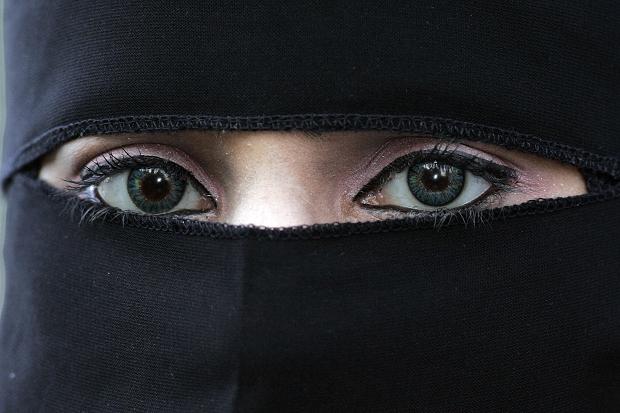
The applicant, who is a practising Muslim, states that she wears the burka in order to live according to her faith, her culture and her personal convictions. She specifies that it is a garment that covers the entire body and includes both a thin veil covering the face and the niqab, a veil covering the entire face except the eyes. She points out that neither her husband nor any other member of her family puts pressure on her to wear the burka. She adds that she wears the niqab in public and in private, but not systematically. She agrees not to wear the niqab in some circumstances but wants to be able to wear it when she chooses to. Her purpose, she states, is not to inconvenience others but to live according to her principles.

Complaints and Procedure

Relying on Article 3 (prohibition of torture and inhuman and degrading treatment), the applicant complains that as it is forbidden, on pain of a criminal penalty, to wear a garment designed to conceal the face in public places she risks incurring a criminal penalty, and suffering harassment and discrimination, if she wears the burka in public.

Relying on Article 8 (right to respect for private and family life), she complains that the statutory prohibition on wearing a garment designed to conceal the face in public places prevents her from dressing as she chooses in public.

Relying on Article 9, she complains of a violation of her right to freedom of thought, conscience and religion, as a result of the same circumstances. In her view, her inability to wear the full veil in public places is incompatible with the freedom to manifest her religion or belief individually or collectively, in public or in private, in worship, teaching, practice and observance.

Relying on Article 10, she complains of a violation of her right to freedom of expression, as a result of the same circumstances. She also complains that she is unable to wear in public a garment expressing her faith and religious, cultural and personal identity.

Relying on Article 11, she complains of a violation of her right to freedom of assembly and association, as a result of the same circumstances and of the fact that she is prevented from assembling with others in public wearing the full veil.

Relying on Article 14 (prohibition of discrimination), she complains that the statutory prohibition on wearing a garment designed to conceal the face in public places gives rise to discrimination based on sex, religion and ethnic origin to the detriment of women who, like her, wear the full veil.

The application was lodged with the European Court or Human Rights on 11 April 2011.

It was communicated to the French authorities, with questions by the Court, on 1 February 2012.


Source: European Court of Human Rights (Registrar of the Court)


segunda-feira, 17 de junho de 2013

Pew-Templeton Global Religious Futures Project

The Pew-Templeton Global Religious Futures project analyzes religious change and its impact on societies around the world.

The Pew Research Center’s Forum on Religion & Public Life uses a range of social science methods, including public opinion surveys, demographic analysis and coding, to examine three related areas of global change:

Patterns in religious beliefs and practices, including how they shape people’s social values and political attitudes;

Trends in religious affiliation, including the current and projected size of the world’s major religious groups; and

Comparisons of restrictions on the practice of religion, including restrictions imposed by governments as well as social groups, organizations and individuals.
The Pew-Templeton Global Religious Futures project is jointly and generously funded by The Pew Charitable Trusts and the John Templeton Foundation.

Read the reports produced as part of the Global Religious Futures project here.


sábado, 15 de junho de 2013

Secrets of Britain's Sharia Councils


Panorama goes undercover to investigate what is really happening in Britain's Sharia Councils - Islamic religious courts. Some women reveal they have suffered domestic violence ignored by these councils as campaigners say it is time to tackle the parallel legal system which can run counter to British law.

Video source: BBC.

Read more at: Gatestone Institute.


terça-feira, 4 de junho de 2013

The Virginia Act For Establishing Religious Freedom

Thomas Jefferson, 1786

Well aware that Almighty God hath created the mind free; that all attempts to influence it by temporal punishments or burdens, or by civil incapacitations, tend only to beget habits of hypocrisy and meanness, and are a departure from the plan of the Holy Author of our religion, who being Lord both of body and mind, yet chose not to propagate it by coercions on either, as was in his Almighty power to do; that the impious presumption of legislators and rulers, civil as well as ecclesiastical, who, being themselves but fallible and uninspired men, have assumed dominion over the faith of others, setting up their own opinions and modes of thinking as the only true and infallible, and as such endeavoring to impose them on others, hath established and maintained false religions over the greatest part of the world, and through all time; that to compel a man to furnish contributions of money for the propagation of opinions which he disbelieves, is sinful and tyrannical; that even the forcing him to support this or that teacher of his own religious persuasion, is depriving him of the comfortable liberty of giving his contributions to the particular pastor whose morals he would make his pattern, and whose powers he feels most persuasive to righteousness, and is withdrawing from the ministry those temporal rewards, which proceeding from an approbation of their personal conduct, are an additional incitement to earnest and unremitting labors for the instruction of mankind; that our civil rights have no dependence on our religious opinions, more than our opinions in physics or geometry; that, therefore, the proscribing any citizen as unworthy the public confidence by laying upon him an incapacity of being called to the offices of trust and emolument, unless he profess or renounce this or that religious opinion, is depriving him injuriously of those privileges and advantages to which in common with his fellow citizens he has a natural right; that it tends also to corrupt the principles of that very religion it is meant to encourage, by bribing, with a monopoly of worldly honors and emoluments, those who will externally profess and conform to it; that though indeed these are criminal who do not withstand such temptation, yet neither are those innocent who lay the bait in their way; that to suffer the civil magistrate to intrude his powers into the field of opinion and to restrain the profession or propagation of principles, on the supposition of their ill tendency, is a dangerous fallacy, which at once destroys all religious liberty, because he being of course judge of that tendency, will make his opinions the rule of judgment, and approve or condemn the sentiments of others only as they shall square with or differ from his own; that it is time enough for the rightful purposes of civil government, for its officers to interfere when principles break out into overt acts against peace and good order; and finally, that truth is great and will prevail if left to herself, that she is the proper and sufficient antagonist to error, and has nothing to fear from the conflict, unless by human interposition disarmed of her natural weapons, free argument and debate, errors ceasing to be dangerous when it is permitted freely to contradict them.
Be it therefore enacted by the General Assembly, That no man shall be compelled to frequent or support any religious worship, place, or ministry whatsoever, nor shall be enforced, restrained, molested, or burdened in his body or goods, nor shall otherwise suffer on account of his religious opinions or belief; but that all men shall be free to profess, and by argument to maintain, their opinions in matters of religion, and that the same shall in nowise diminish, enlarge, or affect their civil capacities.

And though we well know this Assembly, elected by the people for the ordinary purposes of legislation only, have no powers equal to our own and that therefore to declare this act irrevocable would be of no effect in law, yet we are free to declare, and do declare, that the rights hereby asserted are of the natural rights of mankind, and that if any act shall be hereafter passed to repeal the present or to narrow its operation, such act will be an infringement of natural right.

----------------
Comment: 

Thomas Jefferson drafted The Virginia Act for Establishing Religious Freedom in 1779 three  years after he wrote the Declaration of Independence. The act was  not passed by the General Assembly of the Commonwealth of Virginia until 1786. Jefferson was by then in Paris as the U.S. Ambassador to France. The  Act was resisted by a group headed by Patrick Henry who sought to pass a  bill that would have assessed all the citizens of Virginia to support a plural establishment. James Madison's Memorial and Remonstrance Against  Religious Assessments was, and remains, a powerful argument against state supported religion. It was written in 1785, just a few months before  the General Assembly passed Jefferson's religious freedom bill.  Both the draft  version of the Virginia Act for Establishing Religious Freedom  and  the Memorial and  Remonstrance Against Religious Assessments  are availalbe on this site.

Source: The Religious Freedom Page - University of Virginia.


domingo, 2 de junho de 2013

Dignitatis Humanae and the Legacy of Vatican II


This video is from the event "Catholic Perspectives on Religious Liberty," a symposium hosted by Georgetown University's Berkley Center for Religion, Peace & World Affairs. The event was held as part of the Religious Freedom Project, which is an interdisciplinary research project sponsored by the Luce Foundation.

September 13, 2012 | Since the Second Vatican Council the Church has placed considerable emphasis on the importance of religious freedom as a matter of human dignity and individual flourishing, and as central to a just and democratic society. Abroad, the persecution of Christians and others has reached significant, perhaps even crisis, proportions. At home, issues involving same-sex marriage, abortion, and contraception have sparked sharp controversy about threats to religious freedom, leading the US Conference of Catholic Bishops to establish its own committee to begin engaging these issues.

The Maryland Catholic Bishops Conference and the Religious Freedom Project of Georgetown University's Berkley Center for Religion, Peace, and World Affairs brought together leading Catholic scholars to address these questions from different perspectives. Cardinal Donald Wuerl gave the symposium keynote address.

Participant Bios:

GERARD BRADLEY, a noted scholar in the fields of constitutional law as well as law and religion, joined the faculty of the Notre Dame Law School as professor in 1992, having taught at the University of Illinois from 1983 to 1992. With Professor John Finnis, he has served as director of Notre Dame's Natural Law Institute and as co-editor of the institute's American Journal of Jurisprudence since 1996. He is president of the Fellowship of Catholic Scholars, vice president of the American Public Philosophy Institute, member of the board of advisors of the Cardinal Newman Society, chair of the Federalist Society's Religious Liberties Practice Group, member of the Ramsey Colloquium on Theological Issues, and member of the board of advisors of the Society of Catholic Social Scientists. He is a graduate of Cornell University and Cornell Law School. 

LISA CAHILL is J. Donald Monan Professor in the Department of Theology at Boston College. Her scholarly interests lie broadly in the area of Christian ethics, particularly Catholic social ethics, sex and gender ethics, New Testament and ethics, bioethics, the history of Christian ethics, and the ethics of war and peace. She is a past president of both the Catholic Theological Society of America and the Society of Christian Ethics and she is a fellow of the American Academy of Arts and Sciences. Professor Cahill has written a number of books including Sex, Gender, and Christian Ethics, Family: A Christian Social Perspective, and Bioethics and the Common Good. Her articles have been published in Theological Studies, The Journal of the Society of Christian Ethics, and the Journal of Religious Ethics. She holds a B.A. from the University of Santa Clara and an M.A. and Ph.D. from the University of Chicago. 

JOHN O'MALLEY is a Jesuit priest and University Professor in the department of Theology at Georgetown University. His specialty is the religious culture of early modern Europe, especially Italy. He is also an expert on the Second Vatican Council. Fr. O'Malley has held a number of fellowships, from the Guggenheim Foundation, the National Endowment for the Humanities, the American Council of Learned Societies, and other academic organizations. He is the author of The First Jesuits and What Happened at Vatican II, among other publications. He has edited or co-edited a number of volumes including The Collected Works of Erasums and The Jesuits and the Arts. Fr. O'Malley holds a doctorate from Harvard University. 

TOM FARR is Director of the Religious Freedom Project at the Berkley Center for Religion, Peace, and World Affairs and a Visiting Associate Professor of Religion and International Affairs at Georgetown's Edmund A. Walsh School of Foreign Service. A former American diplomat and leading authority on international religious freedom, Farr has published widely, including "Diplomacy in an Age of Faith" in Foreign Affairs (March/April 2008), and World of Faith and Freedom: Why International Religious Liberty is Vital to American National Security (Oxford University Press, 2008). Farr received his BA in history from Mercer University, and his Ph.D. in modern British and European history from the University of North Carolina.

Source: Georgetown University's Berkley Center for Religion, Peace & World Affairs.